
Pickup currently unavailable
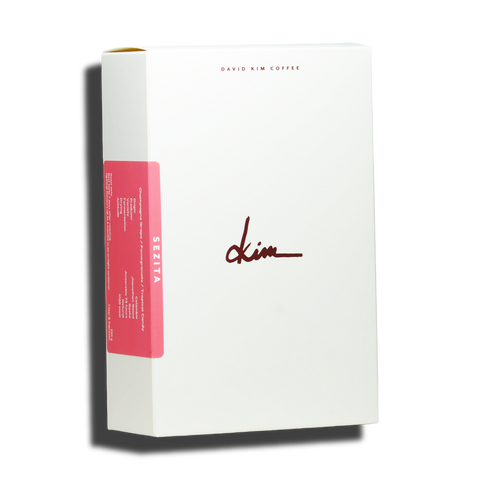
SEZITA – red fruit flavours with exotic notes of tropical fruits
- Origin: Costa Rica, Alajuela / West Valley
- Farm: Volcan Azul | Producer: Alejo Castro
- Varietal: SL-34
- Process: Anaerobic natural
- Altitude: 1,750 masl
- Fermentation: 4 days
- Drying: Patios + mechanical dryer (patio 3 days + 68 hours mechanical)
- Flavour notes: Cherry compote, Starfruit, Bergamot
ABOUT VOLCAN AZULGENERATIONS
Volcan Azul, owned by Alejo Castro, is a distinguishedcoffee farm located in the highlands of Costa Rica.Alejo, whose family has a long tradition in coffeecultivation, has dedicated himself to elevating the farm'squality and environmental responsibility. Under hismanagement, Volcan Azul has become renowned for itsmeticulous approach to coffee production, includingadvanced drying and processing methods, as well as thecultivation of unique coffee varieties.
The history of Volcan Azul and Alejo’s family is deeply intertwined with the development of Costa Rica’s coffee industry. The family’s journey began in the early 19th century with Alejo Castro Jiménez in Costa Rica and Wilhelm Kahle in the south of Mexico after acquiring land in the fertile highlands of Costa Rica. Today this place is referred to as Hacienda Colima, a farm still owned and operated by Alejo.
Alejo has continued the family tradition of excellence incoffee cultivation by modernizing practices whilehonoring the rich heritage of his ancestors. Through theuse of advanced techniques such as meticulous soilmanagement and innovative processing methods, thefarm has set a benchmark in the industry, which we willdelve into on the next page.
Alejo has continued the family tradition of excellence incoffee cultivation by modernizing practices whilehonoring the rich heritage of his ancestors. Through theuse of advanced techniques such as meticulous soilmanagement and innovative processing methods, thefarm has set a benchmark in the industry, which we willdelve into on the next page.
PROCESSING AT VOLCAN AZUL
Alejo is renowned for his experimental approach tocoffee processing. Initially, his Volcan Azul farmexclusively produced washed coffees. However, in 2013,he began exploring the honey process, followed bynaturals in 2014. By 2019, Alejo was pioneering theanaerobic process, with the Caturra varietal being hisfirst anaerobic prototype. He remains dedicated toadvancing coffee quality through ongoingexperimentation and innovation.
GESHA - A VARIETY OF LEGACY
The Gesha variety traces its roots back to Ethiopian coffee forests, first collected in the 1930s before making its way to Tanzania, then to Central America in the 1950s. Cataloged as T2722, Gesha reached Panama in the 1960s, initially prized for its resistance to coffee leaf rust but overlooked due to its fragile structure. Today, Panamanian Gesha, directly descended from T2722, is celebrated for its unmistakable florality and sweetness. When cultivated at high altitudes, it offers extraordinary profiles like jasmine aromatics, delicate peach sweetness, and a brilliant, lively acidity.
PROCESSING & DRYING AT VOLCAN AZUL
SL34, named after Scott Agricultural Laboratories in Nairobi, Kenya, wasdeveloped in the 1930s–1940s to identify the most promising coffeevarieties for Kenyan growers. Selected from a Typica tree at LoreshoEstate, originating from Latin American Typica plants introduced viaTanzania, SL34 is genetically Typica, despite often being linked toBourbon like its cousin SL28. Compared to SL28, which thrives in drierclimates with bright citrus notes, SL34 prefers humid conditions,producing sweeter, creamier flavors. Often grown or blended with SL28,it creates complex cup profiles that delight coffee enthusiasts,highlighting the diversity and elegance of Kenyan coffee.Coffee can be dried through various methods such as patio drying, raisedbeds, and mechanical dryers. The chosen drying technique greatlyinfluences the structure, density, and longevity of the final product. AtVolcan Azul, patio drying and mechanical dryers are used for larger lots,while raised beds are primarily employed for micro-lots. Notably, patiodrying takes place at 1500 meters above sea level, where coolertemperatures slow the process, allowing the beans' aromas to fullydevelop.